

Market Overview
Kazakhstan’s electricity sector operates within the Unified Electric Power System (UEPS), which is a set of power plants, transmission lines and substations that ensure reliable and high- quality electricity supply to consumers in Kazakhstan.
An authorised government agency represented by the Ministry of Energy of the Republic of Kazakhstan 3 regulates the energy sector, including the RES4. The Committee for Regulation of Natural Monopolies under the Ministry of National Economy of the Republic of Kazakhstan is responsible for implementation of the national policy of natural monopolies with regard to regulated services of electricity transmission, production, transmission, distribution and supply of heat5. The Ministry of Industry and Infrastructure Development of the Republic of Kazakhstan manages the coal industry6.
ELECTRICITY AND CAPACITY MARKET IN KAZAKHSTAN
Kazakhstan's electricity balance
In 2022, thermal power plants dominated the electricity generation in the Unified Electric Power System (UEPS) with 78.5% of the total output.
According to the System Operator, Kazakhstan's power plants produced 112.86 billion kWh between January and December 2022, a 1.4% drop (up by 1.58 billion kWh) from 2021. In the reporting period, a decrease in power generation was observed throughout the Northern Zone of the UEPS of Kazakhstan and was due to lower consumption, more accidents in energy producing organisations, restrictions imposed on digital mining, etc.
ELECTRICITY GENERATION/CONSUMPTION BALANCE, BILLION KWH
| Electricity indicators | 2020 | 2021 | 2022 | Δ 2022/2021, % |
|---|---|---|---|---|
| Electricity generation, including: | 108.09 | 114.45 | 112.86 | -1.4 |
| Thermal power plants (TPPs) | 86.66 | 91.16 | 88.62 | -2.8 |
| Gas turbine power plants (GTPPs) | 9.53 | 10.70 | 10.94 | 2.2 |
| Hydropower plants (HPPs) | 9.55 | 9.18 | 9.19 | 0.0 |
| Wind power plants (WPPs) | 1.09 | 1.76 | 2.36 | 34.3 |
| Solar power plants (SPPs) | 1.25 | 1.64 | 1.75 | 7.2 |
| Biogas plants (BGPs) | 0.5 | 0.3 | 0.04 | -84.0 |
| Electricity consumption | 107.34 | 113.89 | 112.94 | -0.8 |
| Net power flow, "+" deficit, "-" surplus, including: | -0.74 | -0.56 | 0.79 | 40.5 |
| Russia | 0.12 | 0.46 | 0.47 | 2.0 |
| Central Asia | -0.86 | -1.02 | -0.40 | 38.5 |
The Unified Electric Power System of Kazakhstan is conventionally divided into three areas - Northern Zone, Southern Zone, and Western Zone.
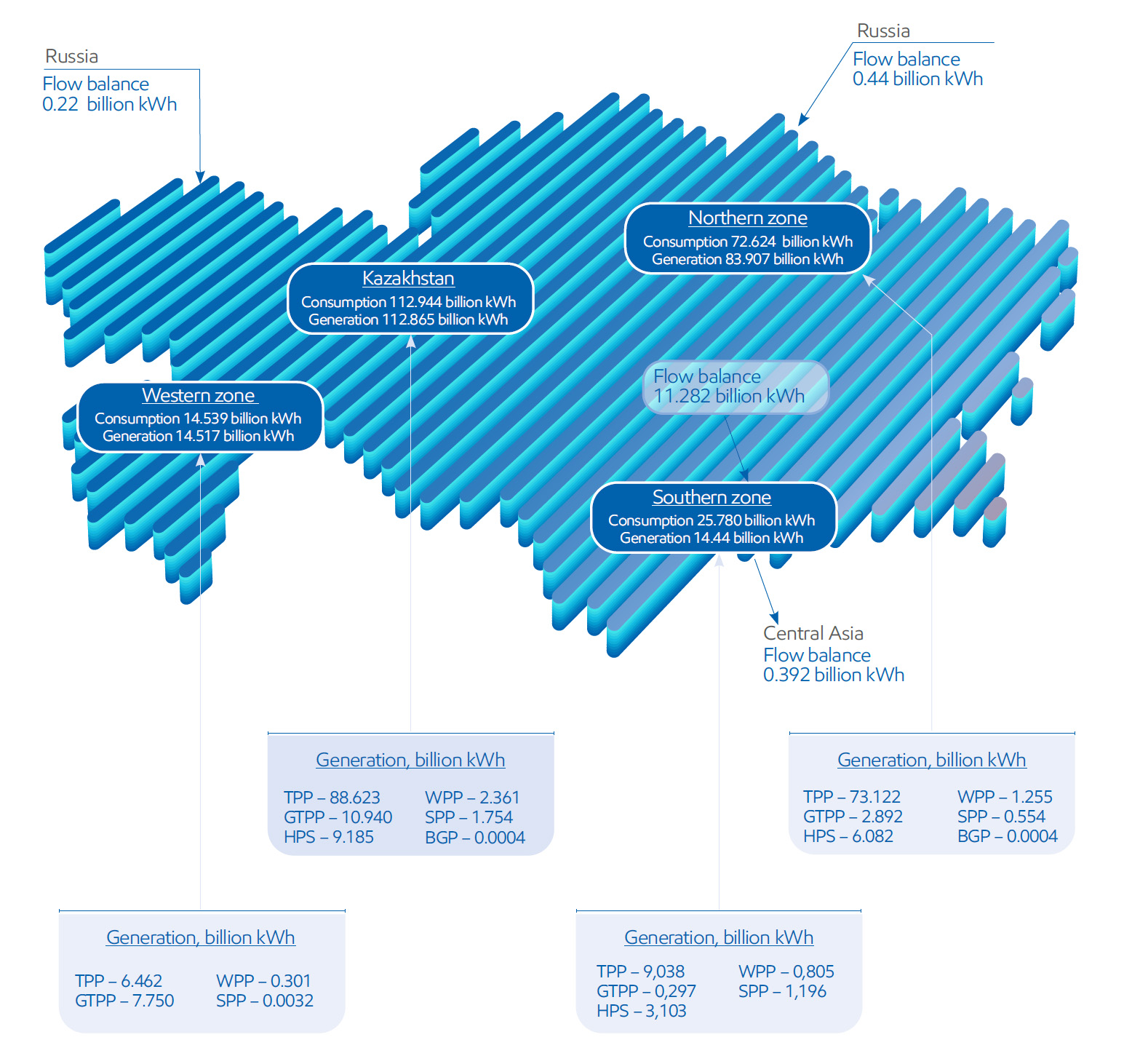
The Northern Zone, home to major coal deposits and hydropower resources, produced 74.3% (83.9 billion kWh) of the country's total electricity in 2022. The Northern Zone covers electricity shortages in the Southern Zone and supports Kazakhstan's export potential.
In 2022, electricity generation in the Southern Zone was 12.7% (14.4 billion kWh), with electricity shortages covered by supplies from the Northern Zone.
In the reporting period, the Western Zone generated 14.5 billion kWh (12.8%) of the total electricity. A key aspect of this zone is the absence of electricity connections with the electricity grids in the Northern Zone and Southern Zone in Kazakhstan.
During the reporting period, electricity generation increased significantly in the Atyrau, Jambyl, Kostanay, Kyzylorda, and Turkestan regions. The 54.8% (1.66 billion kWh) surge in electricity generation in Jambyl region was due to the connection of two additional units at Jambyl TPP to cover the deficit in the Southern Zone.
Decrease in electricity production were seen in the Akmola, Aktobe, Almaty, East Kazakhstan, West Kazakhstan, Karaganda, Mangystau, Pavlodar and North Kazakhstan regions. At the same time, electricity consumption increased due to natural growth in Turkestan by 4.3% (249.3 million kWh), in Akmola by 3.7% (380.5 million kWh), in Aktobe by 0.8% (55.2 million kWh), in Mangystau by 0.6% (33.2 million kWh), and in Atyrau by 0.2% (16.1 million kWh).
However, the country as a whole saw a 0.8% decrease in electricity consumption in 2022 compared to 2021. Thus, consumption decreased by 1.7% in the Northern Zone and by 0.1% in the Western Zone, while consumption in the Southern Zone grew by 1.1%.
To balance electricity generation/consumption in January-December of 2022, electricity exports to Russia reached 1.26 billion kWh, while imports from the Russian Federation amounted to 1.14 billion kWh. In particular, in 2022, KEGOC JSC exported 1.21 billion kWh to Russia and imported 0.97 billion kWh.
Electricity export and import
In 2022, electricity exports to Russia grew by 10.9 % compared to 2021, while electricity imports from Russia dropped by 25.6 %.
EXPORT/IMPORT OF ELECTRICITY OF THE REPUBLIC OF KAZAKHSTAN, BILLION KWH
| Regions | 2021 | 2022 | Changes, % |
|---|---|---|---|
| Kazakhstan exports: | -2.46 | -1.83 | -25.2 |
| to Russia | -1.13 | -1.26 | 10.9 |
| to UEPS of the Central Asia | -1.32 | -0.58 | -56.1 |
| Kazakhstan imports: | 1.84 | 1.45 | -21.2 |
| from Russia | 1.54 | 1.14 | -25.6 |
| Net power flow, "+" deficit, "-" surplus: | -0.62 | -0.39 | -37.0 |
Position of Samruk-Energy JSC in the Kazakhstan electricity market
Electricity production
The Samruk-Energy JSC Group of Companies is the leader among electricity producers in Kazakhstan.
In December 2022, the Samruk-Energy JSC Group of Companies produced 35.88 billion kWh. Still, the reporting period saw a decrease in production at Ekibastuz GRES-2 JSC, Samruk-Green Energy LLP, and First Wind Power Station LLP due to an unscheduled shutdown of power unit No 1 of Ekibastuz GRES-2, repair of a wind turbine, and adverse weather conditions.
PRODUCERS’ SHARE IN THE ELECTRICITY MARKET IN 2022, %
| Producers of electricity in Kazakhstan | Indicator |
|---|---|
| Samruk-Energy JSC | 31.8 |
| ERG | 17.0 |
| Central Asian Electric Power Corporation JSC | 4.5 |
| Kazzinc LLP | 2.4 |
| Kazakhmys-Energy LLP | 3.7 |
| KKS LLP | 5.4 |
| Jambyl GRES LLP | 3.2 |
| Others | 32 |
ELECTRICITY OUTPUT BY PRODUCER, BILLION KWH
| Producers of electricity in Kazakhstan | 2020 | 2021 | 2022 |
|---|---|---|---|
| Samruk-Energy JSC | 31.30 | 35.61 | 35.88 |
| ERG | 18.80 | 19.91 | 19.23 |
| Central Asian Electric Power Corporation JSC | 7.03 | 6.24 | 5.09 |
| Kazzinc LLP | 2.94 | 2.97 | 2.69 |
| Kazakhmys-Energy LLP | 7.26 | 6.60 | 4.22 |
| KKS LLP | 6.44 | 6.60 | 6.14 |
| Jambyl GRES LLP | 1.80 | 2.14 | 3.65 |
ELECTRICITY GENERATION BY TPPS, CHPPS, MILLION KWH
| Indicator | 2021 | 2022 |
|---|---|---|
| Ekibastuz GRES-1 | 22,788 | 23,048 |
| Ekibastuz GRES-2 | 6,433 | 6,002 |
| Almaty Power Plants (w/o Cascade HPPs) | 4,009 | 4,039 |
In 2022, electricity generation reached 35,884 million kWh, up by 1% or 275 million kWh YoY. The growth was mainly due to a 14% increase (62 million kWh) in output of Shardarinskaya HPP due to abnormal rainy weather and increased precipitation in summer and autumn across the Naryn-Syrdarya cascade, which led to an increase in water inflow and a 28% increase (215 million kWh) in output by Moynak HPP due to water level in Bestiubinsk water reservoir.
Outlook
Electricity generation are projected to decrease gradually from the 2022 figures in 2023. A decrease in electricity generation y 641 million kWh is expected mainly due to a decrease in electricity generation by Ekibastuz GRES-1 because of scheduled repairs of power units
Competitive advantages of Samruk-Energy JSC in the electricity market of Kazakhstan in 2022:
- Significant steam coal reserves with low production costs
- Sufficient power generation capacity with a relative level of depreciation in the country
- Government support, as well as support from Samruk-Kazyna JSC
Challenges for Samruk-Energy JSC:
- High level of depreciation of facilities
- Low return on invested capital employed for social projects
- High debt burden
- Government regulation of tariff setting
- Limited capacity to manage the price offer
- Limitations of steam coal exports due to the substitution of Ekibastuz coal in traditional markets, as well as non-competitiveness in other markets due to low coal parameters
- No prospecting to boost coal production
Heat generation
In 2022, heat production was 5,502,000 Gcal. A 5% y-o-y decrease was a result of higher average monthly temperature in the heating period in the reporting period.
HEAT PRODUCTION, ‘000 GCAL
| Indicator | 2021 | 2022 |
|---|---|---|
| Ekibastuz GRES-1 | 136 | 143 |
| Ekibastuz GRES-2 | 76 | 78 |
| Almaty Power Plants | 5,554 | 5,282 |
Outlook
The 2023 heat production targets are projected to rise by 1% against 2022, mainly due to an increase in heat production by Almaty Power Plants JSC.
Electricity transmission
In 2022, electricity transmitted through the networks of Alatau Zharyk Company reached to 8,154 million kWh, up by 7% or 504 million kWh than in 2021.
| 2021 | 2022 |
|---|---|
| 11.92% | 11.45% |
| 7,650 million kWh | 8,154 million kWh |
Outlook
The 2023 electricity transmission rate is expected to grow 1% year on year.
Electricity sales
In the reporting period, the total electricity sales by the power supply company was 6,847 million kWh, up by 2% year on year, due to an increase in electricity consumption in the area covered by the company
| Indicator | Actual 2021 | Actual 2022 | Change | % |
|---|---|---|---|---|
| AlmatyEnergoSbyt | ||||
| Number of consumers, including: | 899,134 | 929,929 | 30,795 | 104% |
| households | 862,980 | 891,214 | 28,234 | 104% |
| corporate | 36,154 | 38,715 | 2,561 | 106% |
| Sales, million kWh | 6,724 | 6,847 | 123 | 102% |
Outlook
The 2023 electricity sales rate is expected to grow 3% year on year.
Development of RES in Kazakhstan
Renewable electricity is one of the most promising investment areas. Although this market has shown multiple growth in recent years — the installed capacity of Kazakhstan's RES has increased more than 14-fold since 2014 — the share of solar and wind generation in Kazakhstan, both in quantitative and percentage terms, still lags far behind other developed and developing countries.
According to the Ministry of Energy of Kazatomprom, there were 130 RES facilities in operation in Kazakhstan with a total capacity of more than 2,388 MW as of 1 January 2023, generating 4.5% of total electricity. In the reporting period, there was an increase in electricity generation by SPPs, WPPs and small HPPs. In total, RES facilities (SPPs, WPPs, BGPs, and small HPPs) generated 5.11 billion kWh in 2022, up by 21.1% year on year.
Share of RES electricity generation in Kazakhstan's electricity market, %
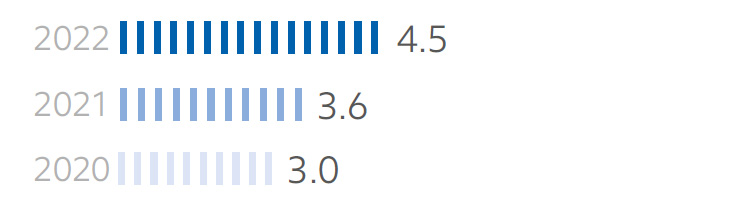
Share of electricity produced by RES at Samruk-Energy JSC in Kazakhstan, %
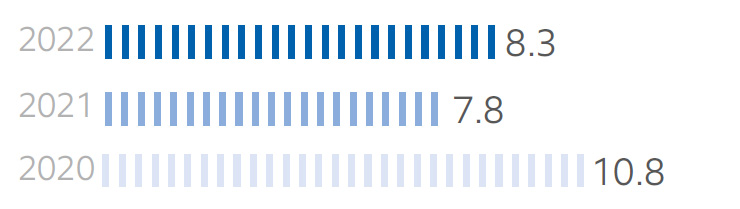
In 2022, Kazakhstan put 15 new RES facilities into operation. In 2014, the installed capacity of RES facilities operated nationwide was 177.52 MW, and in 2022 it exceeded 2,388 MW.
Electricity generation by RES facilities of Samruk-Energy (SPPs, WPPs and small HPPs) for January-December 2022 amounted to 417.5 million kWh, which corresponds to 8.3% of the total share of electricity produced by RES in RK.
ELECTRICITY GENERATION BY RES FACILITIES AT SAMRUK-ENERGY JSC, MILLION KWH
| The Samruk-Energy JSC Group of Companies: | Installed capacity, MW | 2021 | 2022 |
|---|---|---|---|
| Almaty Power Plants JSC, cascade of small HPPs | 43.7 | 160.3 | 173.6 |
| Samruk-Green Energy LLP, SPP | 3.04 | 20.4 | 5.3 |
| Samruk-Green Energy LLP, Shelek WPP | 5 | 0.0 | 14.6 |
| First Wind Power Plant LLP, WPP | 45 | 144.6 | 135.7 |
| Energia Semirechya LLP, Shelek WPP | 60 | - | 88.3 |
| Total | 325.3 | 417.5 |
ELECTRICITY GENERATION BY HPPS, WPPS, AND SPPS, MILLION KWH
| Indicator | 2021 | 2022 |
|---|---|---|
| Moynak HPP | 758 | 973 |
| Qapshaghay HPP | 999 | 1,060 |
| Shardarinskaya HPP | 456 | 518 |
| First Wind Power Station | 145 | 136 |
| Samruk-Green Energy | 20 | 20 |
Capacity market
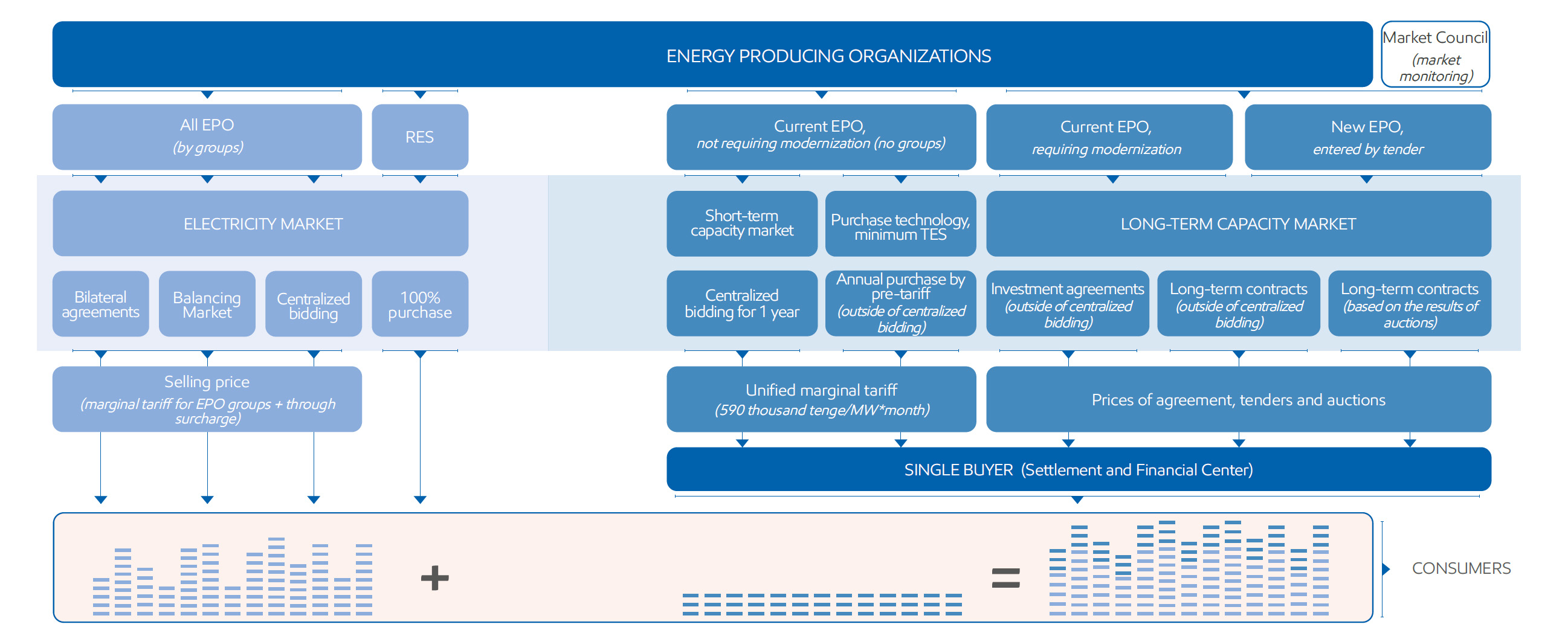
Since 2019, Kazakhstan has had a capacity market functioning alongside the electricity market, the main purpose of which is to attract investment. Investments in modernization, expansion of existing and construction of new power plants are secured through long-term contracts, while investments to cover running costs are secured through centralised competitive capacity tendering.
Samruk-Energy JSC is successfully working to increase the volume of electricity sales by the power plants that are part of the holding. Thus, Samruk-Energy JSC trading house directly communicates with electricity market entities in Kazakhstan and neighbouring countries, carries out commercial dispatching by forming daily schedules of Samruk-Energy JSC Group of Companies and optimally distributes declared volumes in accordance with expediency of load of subsidiary and dependent power plants.
In 2022, Samruk-Energy JSC's power plants participated in electric capacity tenders held on the trading platform of KOREM JSC.
As a result of the centralised tendering held on 19 November 2022, the power plants of Samruk-Energy JSC sold 2,734.4 MW of electricity at a price of 590,000 KZT/MW*month. Including:
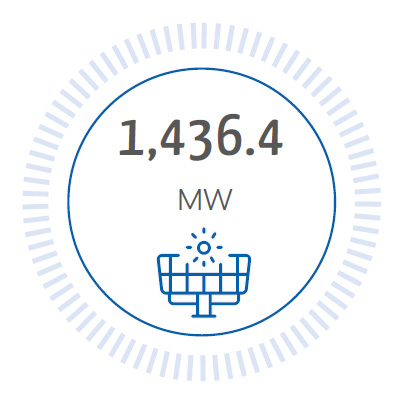
Ekibastuz GRES-1
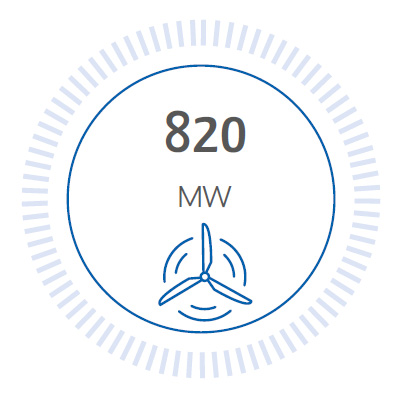
Ekibastuz GRES-2
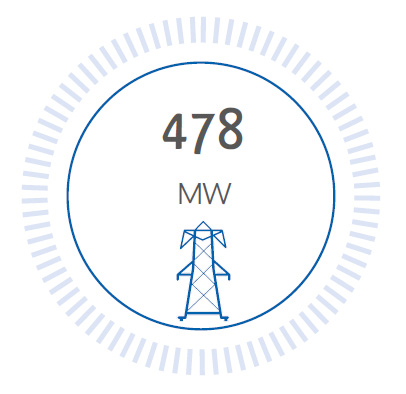
Almaty Power Plants
In accordance with the law,7 individual capacity tariffs have been set for Moynak HPP JSC, Shardarinskaya HPP and Almaty Power Plants JSC in 2022. For Shardarinskaya HPP, it was 61 MW and for Moynak HPP it was 289 MW. These tariffs allow the companies to ensure repayment of borrowed funds used to construct a power plant (Moynak HPP), upgrade Shardarinskaya HPP, and to refinance targeted loans previously extended for investment programs (Almaty Power Plants JSC).
In late 2022, Samruk-Energy JSC's electricity sales to consumers amounted to 35.4 billion kWh (including electricity exports). Domestic market sales grew by 102.5% or 0.87 billion kWh.
Also in the reporting period, 473.2 million kWh of electricity was exported to the Kyrgyz Republic in order to increase electricity sales and maximize the export potential of Samruk-Energy JSC.
Tariff policy
Electricity tariffs for the Company's power generating plants were approved in 2020 by the Authorised Bodies for the period up to 2025. According to Article 12-1.2 of the Law of the Kazakhstan On Electric Power Industry, electricity tariffs are adjusted annually, when necessary.
In 2022, the electricity end-user tariff was based on:
- selling price of the energy producer (marginal tariff and RES premium)
- prices for transmission of electricity on the National Grid
- prices for transmission and distribution on the grids of electricity distribution companies (EDC)
- the cost of regulation, balancing and dispatching services
- the cost of services to ensure availability of electricity capacity
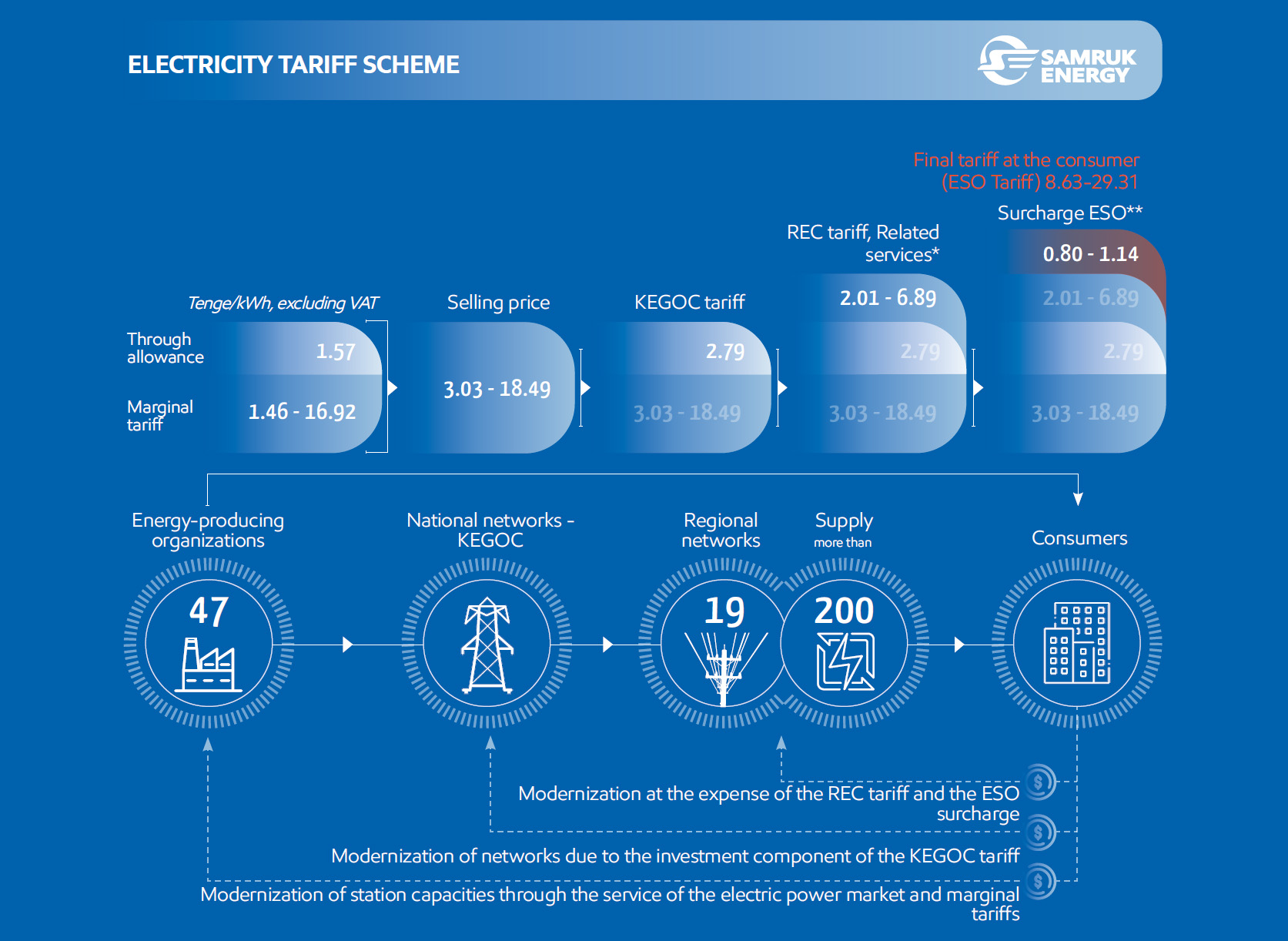
* The associated ESO services include the costs of KEGOC services (dispatching, balancing), COREM services, power regulation services, as well as services to ensure the availability of electric power.
** The ESO surcharge also includes income adjustments as compensation for the difference between the approved and actual purchase and transmission prices of electricity, as well as other losses (losses from the use of differentiated electricity tariffs by consumers and services to ensure the availability of electric power).
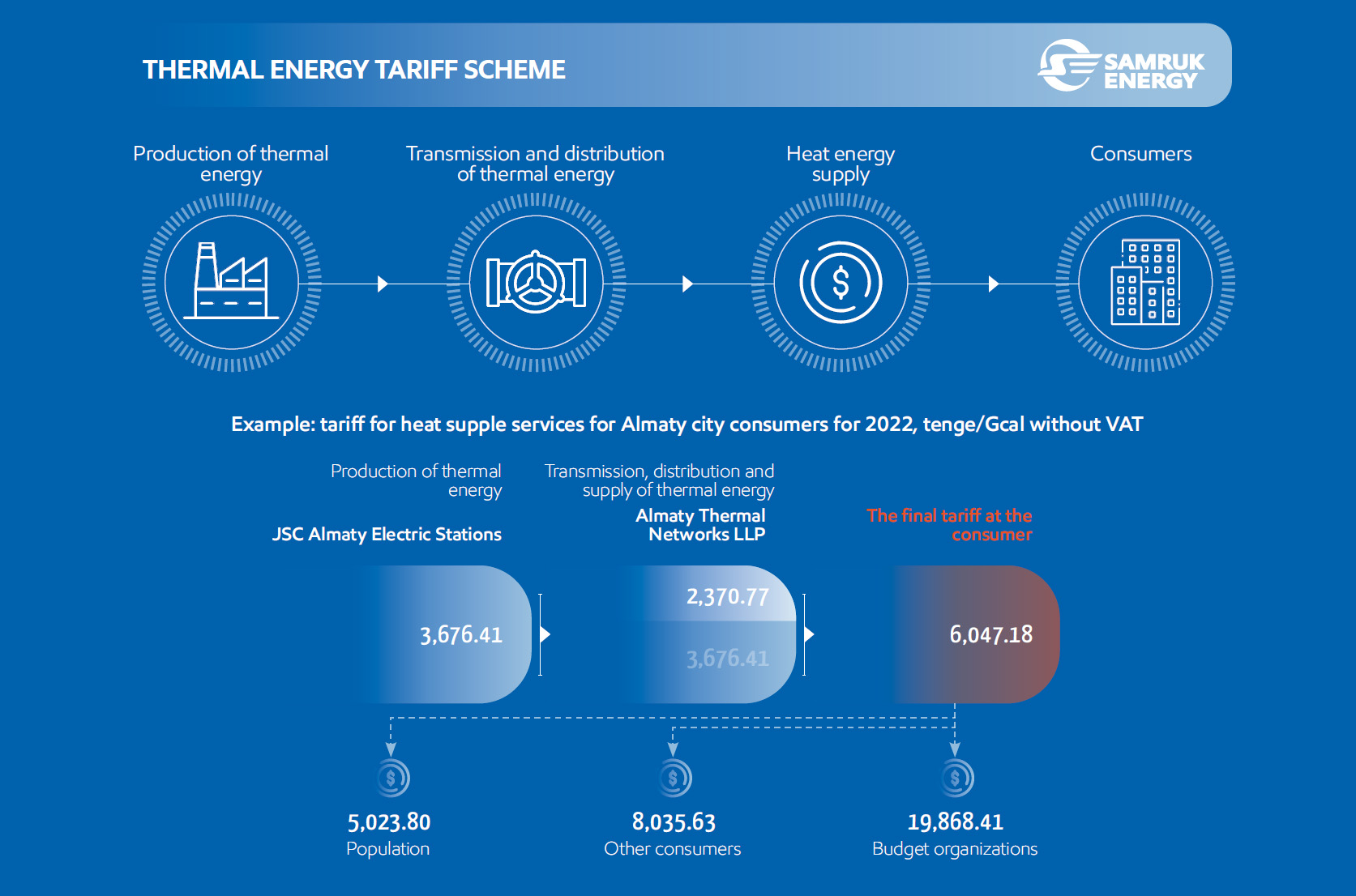
The structure of heat supply systems consists of three sectors: heat production, heat transmission (distribution and sales) and heat consumption. The heat energy market in Kazakhstan is a de facto retail sector where the retail consumer has no practical choice of heat supplier.
Since this market is a natural monopoly entity, the legislation of the RK provides for approval of long-term (5+ years) marginal tariff levels for heat producing companies, including an investment component and annual indexation of costs.
The marginal tariffs are approved by the CRNP and they are reviewed once a year. In addition, there are risks of tariffs remaining unchanged (increasing) in cases where plant costs have increased for objective reasons.
The electricity capacity market has been operating in Kazakhstan since 1 January 2019. After its launch, the weighted average electricity tariffs for plants rose in 2020, with due account for the adjusted marginal tariffs and the individual capacity tariffs introduced on 1 July 2020.
After the approval of deficit tariffs for plants by the Ministry of Energy of the Republic of Kazakhstan, energy producers submitted requests to the Ministry for adjustment of the electricity ceiling tariffs in line with the Regulatory Acts. This resulted in electricity tariff caps approved by the Ministry on 1 July 2020. They were in effect until 31 March 2021.
The rate of return was included into the marginal tariffs of energy producers on 1 April 2021 according to Order of the Minister of Energy dd. 30 March 2021 and the approved Methodology for the Rate of Return Calculation (Order of the Minister of Energy No.205 dd. 22 May 2020, as amended by Order No.76 dd. 11 March 2021).
In line with the Law of Kazakhstan On Support for the Use of Renewables, the feed-in tariff for energy producers takes into account a RES premium at KZT 1.57/kWh, with effect from 1 July 2021. Calculated by Financial Settlement Centre for Renewable Energy LLP, the premium draws on RES support costs in Kazakhstan and the electricity supply by energy producers, which are nominal consumers. Taking into account the RES premium, new marginal tariffs for energy producers were approved by Order No. 211 of the Minister of Energy of Kazakhstan on 24 June 2021. In 2022, the RES premium was KZT 1.58/kWh.
The table below shows the marginal electricity tariffs that were in force for the energy producers in 2022.
MARGINAL ELECTRICITY TARIFFS, KZT/KWH
| Energy producer | Approved tariff 1 January 2022 - 30 June 2022 | Tariffs approved by the Ministry, net of premium, from 1 July 2022 | RES premium | Tariffs incl. premium | Growth rate, from 1 January 2022 |
|---|---|---|---|---|---|
| Ekibastuz GRES-1 | 5.90 | 5.90 | 1.58 | 7.48 | - |
| Ekibastuz GRES-2 | 8.59 | 8.59 | 1.58 | 10.17 | - |
| Almaty Power Plants | 10.23 | 11.19 | 1.58 | 12.77 | 9.4% |
| Moynak HPP | 10.90 | 11.71 | 1.58 | 13.29 | 7.4% |
| Shardarinskaya HPP | 8.77 | 9.82 | 1.58 | 11.40 | 12.0% |
As part of the draft Action Plan for the Implementation of the 2022 Agenda of the Government of the Republic of Kazakhstan, a proposal was considered to keep the marginal tariffs of energy producers at the 2021 levels for a period of 180 days as part of the counter-inflation action. The marginal tariff increase was postponed to 1 July 2022.
Based on the applications submitted for tariff increase, the Ministry of Energy issued Order No. 226 on 30 June 2022 to approve the marginal tariff caps by 12% for Shardarinskaya HPP, 9.4% for Almaty Power Plants, and 7.4% for Moynak HPP.
Since 2020, work is underway with the Ministry of Energy to approve investment tariffs for plants implementing large-scale investment projects: Moynak HPP, Shardarinskaya HPP, Almaty Power Plants, and Ekibastuz GRES-1.
On 28 February 2021, Ekibastuz GRES-1 signed an investment agreement with the Ministry of Energy of Kazakhstan for modernisation, reconstruction, expansion and renewal of Power Unit No.1 with a tariff of KZT 1,199,000/MW*month for the period 2025-2031 and the output of 476.6 MW.
SCOPE OF INVESTMENT AGREEMENTS, '000 KZT/MWH*MONTH
| Energy producer | Output | Individual tariff in 20228 | Period |
|---|---|---|---|
| Almaty Power Plants | 69.5 MW | 3,139.20 | 2020-2024 |
| Moynak HPP | 298 MW | 2,563.67 | 2020-2026 |
| Shardarinskaya HPP | 61 MW | 3,867.98 | 2020-2028 |
| Ekibastuz GRES-1 | 476.6 MW | 1,199 | 2025-2031 |
| Ekibastuz GRES-2 | 576 MW | 5,372 | 2027-2036 |
On 26 January 2021, Ekibastuz GRES-2 submitted an application to the Market Council (KEA), seeking approval of the individual tariff for the expansion and reconstruction of Ekibastuz-2 with Power Unit No. 3. Following an affirmative opinion by the Market Council dated 29 March 2021, the Company submitted the request to the Ministry of Energy for consideration.
Since no decision was made by the Ministry in 2021, Ekibastuz GRES-2 submitted a repeated request on 27 January 2022 for the individual tariff for the expansion and reconstruction of the plant with Power Unit No. 3.
On 30 March 2022, the Market Council held a meeting to recommend that the Ministry of Energy should consider the investment programme of Ekibastuz GRES-2. The request was not decided, nor was a list of energy producers published with which the Ministry planned to make investment agreements in 2022.
From 2023 onwards, electricity and capacity tariffs are projected to be index-linked.
HEAT ENERGY TARIFFS, KZT/GCAL
| Name | 2020 actual | 2021 actual | 2022 actual | 2023 projection | 2024 projection |
|---|---|---|---|---|---|
| Almaty Power Plants | 3,441 | 3,392 | 3,782 | 4,031 | 4,350 |
| Ekibastuz GRES-2 | 697 | 772 | 812 | 873 | 906 |
| Ekibastuz GRES-1 | 367 | 233 | 221 | 233 | 233 |
The legislation approves the long-run (5+ years) marginal tariffs for heat producers that are natural monopolies. The tariffs include an investment component and annual indexation of costs. Marginal tariffs are approved by the Committee for the Regulation of Natural Monopolies and Competition Protection. However, tariffs are raised not more than once a year, so there is a risk that the tariffs would remain unchanged where plant costs increase for objective reasons.
The Committee for Regulation of Natural Monopolies of the Ministry of National Economy of the Republic of Kazakhstan issued Order No. 141-OD on Almaty city and No. 267-OD on Almaty Province on 29 November 2021 to approve tariffs for regulated heat energy production for 2022-2026 with effect from 1 January 2022, with a 8.6% increase. The tariffs are applied to Almaty Power Plants. Due to changes in the retail price of commodity gas for thermal power companies, the Committee for Regulation of Natural Monopolies of the Ministry of National Economy of the Republic of Kazakhstan issued Order No. 97-OD on Almaty city on 26 August 2022 and No. 92-OD on Almaty Province on 27 August 2022 to approve tariffs for regulated heat production for 2022-2026, with effect from 1 September 2022, where the increase in tariff made 6.8% against the rates as of 1 January 2022.
ELECTRICITY TRANSMISSION TARIFFS, KZT/KWH
| Name | 2020 actual | 2021 actual | 2022 actual | 2023 projection | 2024 projection |
|---|---|---|---|---|---|
| Alatau Zharyk Company | 5.95 | 6.07 | 6.58 | 7.33 | 8.27 |
The Department for Regulation of Natural Monopolies also issued Order on 17 May 2021 to approve the marginal tariff for 2021-2025 for Alatau Zharyk Company, which also a natural monopoly, with the tariff coming into effect from 1 June 2021. The approved tariff was 6.52 KZT/kWh for 2022 with an increase of 7%.
Due to changes in the tariffs of Almaty Power Plants (electricity is a strategic commodity for Alatau Zharyk Company), Alatau Zharyk Company applied for a change in the electricity transmission tariff for 2022-2026 (Letter No. 14-4304 dated 15 July 2022). Following consideration of the application, the Department for Regulation of Natural Monopolies in Almaty issued Order No. 89-OD on 18 August 2022 to approve marginal tariffs and tariff estimates for 2022-2026, with effect from 01 September 2022. The approved tariff effective from 1 September 2022 was 6.69 KZT/kWh, an increase of 2.6% YTD.
ELECTRICITY SALE TARIFFS OF LOAD SERVING ENTITIES, KZT/KWH
| Name | 2020 actual | 2021 actual | 2022 actual | 2023 projection | 2024 projection |
|---|---|---|---|---|---|
| AlmatyEnergoSbyt | 17.66 | 18.69 | 20.09 | 23.77 | 26.71 |
AlmatyEnergoSbyt load serving entity is of public importance and is also subject to regulation by the authorised agency. The tariff calculations include operational, financial and investment components. There are risks of artificial barriers put to tariff increases by the Regulator to maintain social stability in the regions. Consumption rate differentiation is kept for households, while electricity is supplied at the average rate to legal entities.
As the President instructed the authorities to stabilise the social and economic situation in the country and introduce a moratorium on utility tariff increases for households for 180 days until 1 July 2022, the application was postponed until 1 July 2022.
On 26 August 2022, the Department for Regulation of Natural Monopolies sent a Reasonable Opinion on the price increase to 21.16 KZT/kWh or 7.2% over the current level from 1 September 2022, taking into account the increase of energy source tariffs from 1 July 2021.
COAL SALES, KZT/TONNE
| Name | 2020 actual | 2021 actual | 2022 actual | 2023 projection | 2024 projection |
|---|---|---|---|---|---|
| Bogatyr Komir | 2,311 | 2,292 | 2,669 | 3,337 | 3,458 |
The selling price of Bogatyr Komir's coal is approved independently in the price list for three groups of consumers in Kazakhstan (energy at the junction station, energy at the coal station, municipal and domestic needs). Regulation relies on the Business Code of the Department for Regulation of Natural Monopolies of the Ministry of Energy of Kazakhstan.
Kazakhstan's coal market
The steam coal market in Kazakhstan is characterised by its fragmentation. Thus, the main major players are Bogatyr Komir LLP (Samruk-Energy JSC and UC RUSAL), EEC JSC and Shubarkol Komir JSC (ERG), Kazakhmys Corporation LLP, Karazhyra JSC, and Angrensor Energy LLP.
According to the Bureau of National Statistics, coal producers in Kazakhstan produced 113.93 million tonnes of hard coal between January and December 2022, which is an increase of 2% compared to the same period in 2021.
COAL PRODUCTION, MILLION TONNES
| Indicators | 2020 | 2021 | 2022 | Δ, 2022-2021,% |
|---|---|---|---|---|
| Pavlodar region | 67.05 | 66.93 | 68.39 | 2.2 % |
| Karaganda region | 33.61 | 35.36 | 34.28 | -3.1 % |
| East Kazakhstan region | 8.39 | 8.80 | 8.83 | 0.3 % |
| Total | 109.22 | 111.74 | 113.93 | 2 % |
At the end of the reporting period, Bogatyr Komir LLP produced 42.47 million tonnes of coal, which is 4.8% less than in 2021. At the same time, the company's share in 2022 was 37.3% of Kazakhstan's total coal production and 62.1% of Ekibastuz coal basin's coal production.
COAL SALES BY BOGATYR KOMIR, MILLION TONNES
| Indicator | 2021 | 2022 | Change, 2022-2021 |
|---|---|---|---|
| Domestic market | 34,939 | 32,325 | -5% |
| Export | 9,802 | 10,084 | |
| Total | 44,741 | 42,409 |
At the yearend of 2022, coal sales reached 42,409,000 tonnes, a decrease of 5% or 2,331,000 tonnes (a decrease of 2,614 thousand tonnes or 7% in domestic coal sales and an increase of 282,000 tonnes or 3% in exports). The stripping ratio was 0.78 m³/tonne in 2022, compared to 0.73 m³/tonne last year.
Outlook
Coal sales are forecast to grow by 1,891,000 tonnes in 2023, or 4% above the 2022 actual.
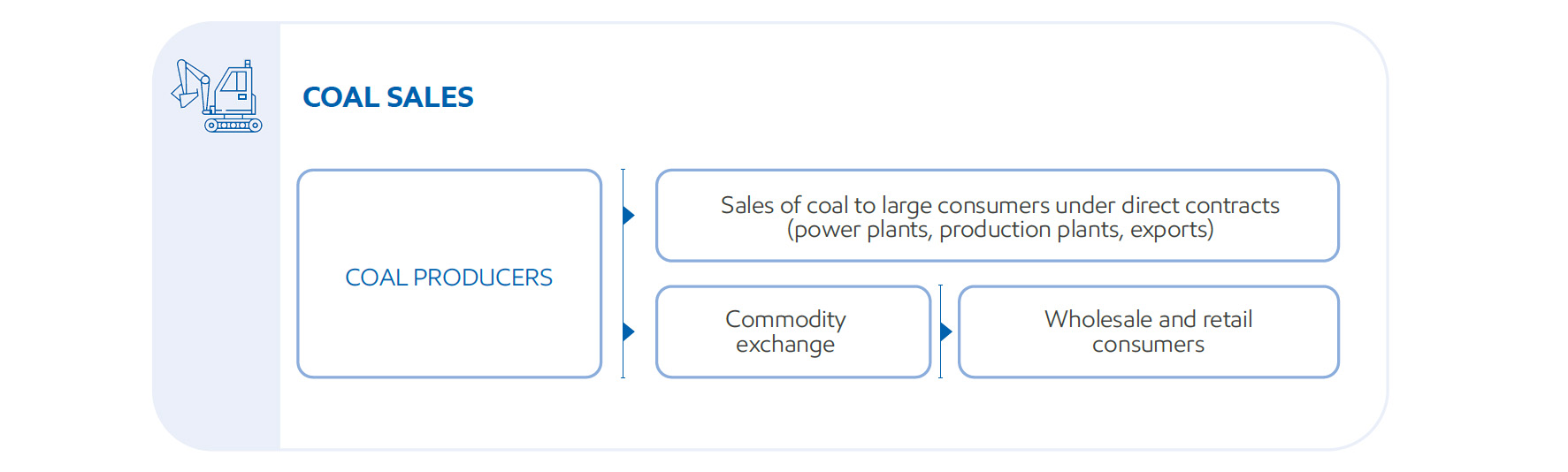
Major coal consumers of Bogatyr Komir LLP include the energy systems of Astana, Almaty, Karaganda, Petropavlovsk, Pavlodar, Stepnogorsk, Ekibastuz TPP-1 and TPP-2. Buyers of coal (power plants) arrange and pay for the transportation of coal from Ekibastuz station (Bogatyr Komir LLP) to the destination point by themselves. Contracts of carriage are entered into with freight forwarders involving wagon owners (operators).
For small boiler houses located in rural areas, Ekibastuz coal is the passport fuel. Under the results of exchange transactions, shipment of coal for domestic needs is carried out: by rail and road transport.
In 2022, Bogatyr Komir LLP's coal sales volume decreased by 5.2% (2.33 million tonnes) compared to 2021.
VOLUME OF COAL SALES TO CONSUMERS, MILLION TONNES
| Region | 2020 | 2021 | 2022 |
|---|---|---|---|
| Almaty Power Plants | 3.29 | 3.00 | 3.00 |
| Karaganda Energocenter | 3.50 | 2.78 | 2.31 |
| Astana-Energy | 3.84 | 4.33 | 3.96 |
| Pavlodarenergo PTPP-2. 3 | 2.49 | 2.86 | 2.83 |
| Stepnogorsk TPP | 0.95 | 1.00 | 0.80 |
| EGRES-1 | 11.55 | 13.37 | 13.10 |
| EGRES-2 Plant LLP | 3.01 | 3.68 | 3.37 |
| Bassel Group LLS | 0.54 | 0.42 | 0.47 |
| SevKazEnergo JSC | 2.77 | 2.25 | 1.44 |
| Ekibastuzteploenergo LLP | 0.48 | 0.54 | 13.10 |
| Kokshetau Zhylu State Communal Enterprise on the Right of Economic Use | 0.32 | 0.34 | 0.32 |
| Kombyt | 0.64 | 0.39 | 0.19 |
| Total for the RK domestic market | 33.38 | 34.94 | 32.32 |
| Reftinskaya TPP | 10.06 | 9.80 | 10.08 |
| Total for export to the RF | 10.06 | 9.80 | 10.08 |
strategy
Development strategy for Samruk-Energy JSC
On 29 October 2021, the Board of Directors of Samruk-Energy JSC approved a new Development Strategy of Samruk-Energy JSC for 2022-2031, which takes into account the state policy on strategic planning of the national energy security system, development of electric power industry, corresponding to the main strategic approaches, goals and objectives of the Sole Shareholder.
DEVELOPMENT GOALS OF SAMRUK-ENERGY JSC
Definition of the Company's strategic goals and objectives is based on a PESTEL analysis, which is an analysis of macroeconomic and industry trends, and an analysis of the internal environment.
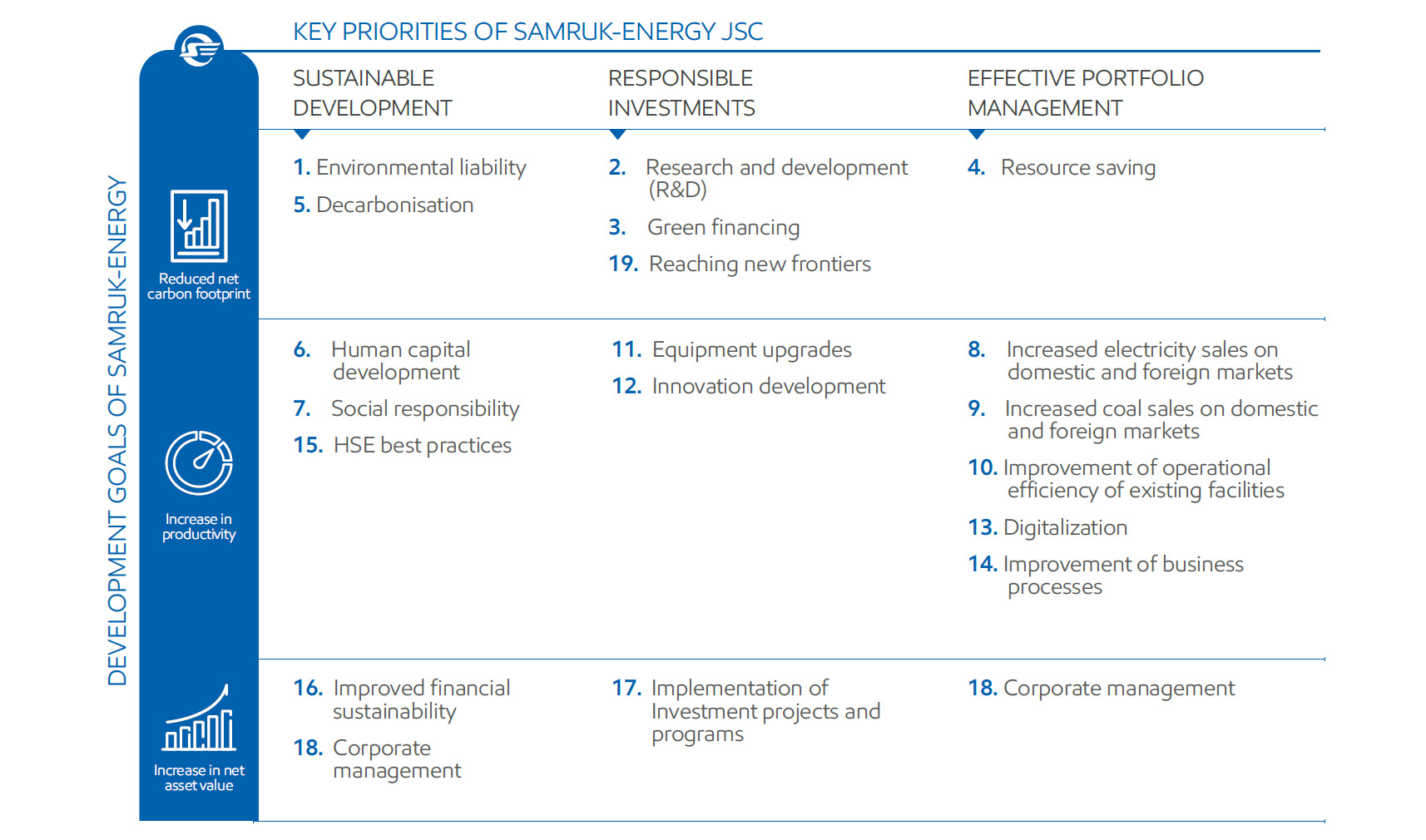
To deliver on the mission effectively, considering the challenges and opportunities at global, national and corporate levels, the Company has identified three key priorities for itself through the ESG lens, ensuring that the three strategic goals of the Company are achieved with the most efficient use of available resources.
In order to achieve the strategic goals with due consideration of key priorities, 19 key initiatives/objectives have been identified and are being implemented by the Company as part of its strategic development.
Key ESG principles of the development strategy of Samruk-Energy JSC:
- Commitment to the principles of sustainable development at the level of the Board of Directors, the executive body and the personnel
- Analysis of the internal and external situation by components: economy, ecology, social issues
- Identification of sustainable development risks in the social, economic and environmental fields
- Construction of a stakeholder map
- Identification of objectives and key performance indicators in sustainable development, development of an action plan and determination of responsible parties
- Integration of sustainable development into key processes, including risk management, planning, human resource management, investment, reporting, operations, etc., as well as into the Development Strategy and decision-making processes
- Advanced training for officials and employees in the area of sustainable development
- Regular monitoring and evaluation of sustainability development activities, assessing the achievement of objectives and key performance indicators (KPIs), taking corrective action, introducing a culture of continuous improvement
Implementation of the development strategy for Samruk-Energy JSC
The Company's strategic indicators are showing a tendency to improvement. The main growth drivers are increasing domestic sales of electricity and capacity, obtaining individual capacity tariffs, reducing specific fuel and water consumption for technological needs, optimizing fuel and energy resource costs and energy saving, as well as reducing the debt burden.
STRATEGIC PERFORMANCE INDICATORS9
| Indicator | 2020 fact | 2021 fact | 2022 actual | 2024 forecast | 2027 forecast | 2031 forecast |
|---|---|---|---|---|---|---|
| Reduced net carbon footprint, tonnes | - | 32,951,527 | 31,978,243 | - | - | ≥(-10%) by 2021 |
| Labour productivity10, ‘000 KZT/person | - | 10,154 | 13,273 | 1.1х vs. 2021 | 1,2х vs. 2021 | 1,5х vs. 2021 |
| ROI (strategic ROI KPI will be applicable if assets are disposed) | - | - | -12% | >СоЕ | >СоЕ | >СоЕ |
| Net asset value (NAV), million KZT | 400,623 | 412,899 | 442,753 | 1,2х vs. 2021 | 1,25 vs. 2021 | 2х vs. 2021 |
| Debt/EBITDA (ratio) | 2.67 | 2.,41 | 1.90 | ≤3.5 | ≤3.5 | ≤3.5 |
| Corporate management rating | - | ВВ | - | ВВВ | А | АА |
| Output of non-primary goods and services (‘000 KZT) | - | 332,537,144 | 381.5 | 1,1х vs. 2021 | 1,2х vs. 2021 | 1,5х vs. 2021 |
In line with the key strategic goals and the 19 key development initiatives and objectives, the Company implemented activities and projects during the reporting period aimed at achieving the main strategic goals. All initiatives and objectives have been developed in accordance with those of Samruk-Kazyna National Wealth Fund.
 |
IMPLEMENTATION OF THE DEVELOPMENT STRATEGY IN 2022 | ||
| Strategic goal | Objective | Measure | Comments on implementation |
 Reduced net carbon footprint |
ENVIRONMENTAL LIABILITY | Installation of an automated environmental emission monitoring system at TPP-1, TPP-2, Almaty Power Plants. | The Group made contracts for the development of design estimate documentation. Supply of equipment and preparatory works are in progress. |
| Use of low-emission swirl pulverised-coal burners. | Contract for the development of design estimate documentation has been concluded. | ||
| R&D | Carbon capture and storage technologies (CCS), carbonchemistry product generation (R&D). | Technical specification approved and tender launched. | |
| GREEN FINANCING | Use of green financing instruments. | The Company has issued green bonds. A report on the use/ allocation of revenues and the impact of funded green projects has been prepared and published on the AIX website and the Company's corporate website. | |
| RESOURCE SAVING | “Construction of a clarified water return pumping station” at TPP-2. | Contract for the development of design estimate documentation has been concluded. | |
| DECARBONISATION | Sale of carbon units (offsets) from RES facilities | The design documentation and monitoring plan have been approved by the authorised environmental authority. Offset units received and credited. | |
 Increase in productivity |
HUMAN CAPITAL DEVELOPMENT | Creating attractive conditions for employees. | Procurement of consultancy services for diagnostics and development of corporate culture has not been agreed with the Fund. |
| Retention of internal talent and attraction of highly qualified staff. | The list of key posts and talent pool have been approved by the Management Board of Samruk- Energy JSC. | ||
| Provision of social guarantees and social stability in the Company. | Wages are indexed annually across the group of companies. | ||
| SOCIAL RESPONSIBILITY | Employee training to ensure that employees understand ethics and principles and have zero tolerance for facts of corruption and bribery. | 32 training sessions were held/ newsletters were sent. On a quarterly basis, the Company`s Board of Directors is provided with information on the activities implemented in this area as part of the reports by the Compliance Service. | |
| INCREASED ELECTRICITY SALES ON DOMESTIC AND FOREIGN MARKETS | RES sales in 2022. | Actual RES sales for 2022 were 414.57 million kWh. | |
| Ensuring the supply of electricity to consumers of the Fund`s group of companies. | By the end of 2022, 6,165.1 million kWh of electricity was supplied to consumers of the Fund`s group of companies. | ||
| Supply of electricity to energyintensive industries (Data Centres, Industrial Zones, etc.). | At the end of 2022, 1,726 million kWh of electricity was supplied to power the energy-intensive industries (Aktogay and Bozshakol mining and processing complexes). | ||
| INCREASED COAL SALES ON DOMESTIC AND FOREIGN MARKETS | Ensuring exports of raw coal to the Russian Federation. | By the end of 2022, the export of raw coal amounted to 10,084 thousand tonnes | |
| IMPROVEMENT OF OPERATIONAL EFFICIENCY | Implementation of the energy saving and energy efficiency program until 2025. | During 2022, 58 different measures were taken, implementation of energy efficiency measures in the Samruk-Energy JSC group of companies. | |
| Reduction of technological losses in Alatau Zharyk Company JSC grids. | Actual losses in the reporting period were 11.45%, a drop against the baseline loss in 2020 (12.6% actual). | ||
| Launch of SCADA system (supervisory control and data acquisition). | The works were not done because of changes in the project (scope and installation locations of equipment). | ||
| Optimization of the repair cycle of equipment | Ministry of Justice of the RK returned the Draft Order for revision by the Committee of Atomic and Energy Supervision and Control of the Ministry of Energy of the Republic of Kazakhstan. | ||
| INNOVATION DEVELOPMENT | Introduction of a pilot dry coal cleaning unit at Severny Open Pit Coal Mine, 3rd seam, with a calorific value of 4,000 kcal/ kg, Stage 1. | The project financing documents package (development of design estimate documentation, project feasibility study) is under approval by UC Rusal. Development of design estimate documentation is planned for 2023, with construction and installation starting in 2024. | |
| DIGITALISATION | Analysis of commercial losses in grids using data analytics. | The project was completed, project report signed. | |
| IMPROVEMENT OF BUSINESS PROCESSES | Electronic archive (part of the measure “Re-engineering the Company's processes to maximise the impact of production, financial and economic activities”). | Deadline postponed to 2023-2024 | |
| Robotisation of routine business processes | Roboticisation of HR routine business processes was introduced thanks to specialised software to free up the time of HR staff. The project was rolled out on the site of Almaty Power Plants. | ||
| HSE BEST PRACTICES | Automation of the process of recording hazardous activities/ conditions and incidents to minimize accidents. | The project report has been approved by the Project Management Committee. | |
| Cooperation with leading companies, conclusion of memoranda. | In March 2022, a Memorandum of Cooperation in H&S was concluded between Samruk-Energy and ArcelorMittal-Temirtau. | ||
 Increase in net asset value |
IMPROVED FINANCIAL SUSTAINABILITY | Compliance with creditors' regulatory financial covenants with fixation on a semiannual and annual basis (except for debt incurred and interest costs arising, in force majeure circumstances (quarantine), as instructed by the Fund and/or the Government of the RK). | All financial covenants of the Company's creditors were met. |
| IMPLEMENTATION OF INVESTMENT PROJECTS | 1. Extension and reconstruction of Ekibastuz TPP-2 with the installation of Unit No. 3. | Delivery of equipment from the PRC is underway. | |
| 2. Extension and reconstruction of Ekibastuz TPP-1 facilities (restoration of Unit No. 1). | Construction and assembly works are in progress. Actual work completion was 75.17%; dismantling reached 84.38%; assembly, 65.96%, and delivery of equipment and supplies, 53.35%. | ||
| 3. Gasification of Almaty TTPs. | Modification of Almaty TPP-2: An open two-stage international tender for the selection of an EPC contractor under the rules of the European Bank for Reconstruction and Development has been announced. Reconstruction of Almaty TPP-3: on 14 December 2022, Almaty Power Plants won a tender, bidding for the construction of new loadfollowing facilities (KZT 9,788,700/ MWh*month excluding VAT). The Bank carried out a preliminary indicative analysis. Reconstruction of TPP-1: On 04 of January 2023, Gosexpertiza RSE gave a clean opinion on the feasibility study of the project. | ||
| 4. Reconstruction of cable networks in Almaty city and Almaty region. | The head of state signed the Law On Amendments and Additions to Some Legislative Acts of the Republic of Kazakhstan on Electricity, Energy Saving and Energy Efficiency, Subsoil Use, Local State Administration, State Border, Housing and Public Utility Services and Science, which includes amendments to the Law of Kazatomprom On Electricity concerning the tariff. The data contained in the amendment will allow for a return on project investment. Contracts were concluded for construction and assembly. | ||
| 5. Transition of Bogatyr Mine to modern In-pit Crushing and Conveying (IPCC). | Pilot start took place in December 2022. Pre- commissioning is scheduled for 2023. | ||
| 6. Diversion of the Kensu River. | The Kensu River Diversion Project is planned to be implemented by QGP PLC, due to the transfer of this asset. The project may be implemented with support of an investor through a public-private partnership. | ||
| 7. Construction of the counter regulating Kerbulak HPP on the Ili River. | Work is underway with the Ministry of Energy of the RK to amend the statutory instrument to provide a tariff allowing implementation of the project. The Company started implementing the project. | ||
| 8. Construction of a 50 MW WPP near Ereymentau city. | To date, access and site roads, as well as mounting pads for wind turbines (foundations for wind turbines) have been constructed; transmission lines have been rebuilt and 35 kV lines have been laid; the 220/35kV substation has been constructed. | ||
| 9. Construction of a 60 MW WPP in the Shelek Corridor. | On 21 July 2022, the Facility Commissioning Certificate was signed. | ||
| 10. Construction of a combined 310 MW wind and hydro power plant in Almaty Province. | Samruk-Kazyna JSC and PowerChina Resources Limited signed a Memorandum of Cooperation on 12 September 2022 to build a combined 310 MW wind and hydro power plant in Almaty Province. | ||
| CORPORATE MANAGEMENT | Preparation of annual report on sustainable development in accordance with GRI. | Integrated Annual Report for 2021 was approved by the Board of Directors on 27.05.2022. | |
| Independent corporate management diagnostics by the Shareholder, and development of medium-term plans to improve corporate management (within the terms set by the Shareholder). | In the first quarter of 2022, the Board of Directors approved the Company's Corporate Management Improvement Plan for 2022-2023. Report on the execution of the Corporate Governance Improvement Plan for 2022 was approved by the Board of Directors. | ||
| Regular evaluation of the Boards of Directors (selfevaluation, independent evaluation) in accordance with the internal BOD evaluation document. | The self-evaluation of the BOD activities for 2022 shall be carried out in 2023. | ||
| Improving the image through awareness- raising activities (annually). | All activities to improve the image through awareness-raising are carried out. | ||
| Obtaining an ESG rating. | The ESG rating is planned to be obtained in the second half of 2023. | ||
activities
Investment activities of Samruk-Energy JSC rely on the principles of commercial expediency, long-term interests, and capital return. The company is aware of its liability and aims to contribute to the development of society by supporting ESG principles and sustainable development plans.
In assessing ESG, the Company follows the Corporate Management Code and the best internationally recognised standards, such as the UN Sustainable Development Goals, the Global Reporting Initiative, the standards of International Finance Corporation (Industry Foundation Classes, IFC) and the European Bank for Reconstruction and Development, the UN Principles for Responsible Investment , etc.
Priorities of Samruk-Energy JSC investment activities
The priority of investment activities of the Samruk-Energy JSC Group of Companies is the commercial expediency of investments and their focus on generation of long-term value, introduction of new technologies and creation of quality jobs.
The Company's approach to investment activities rests on the principles of responsible investment, taking into account environmental, social and managerial ESG factors in investment decisions, to effectively manage risk and build long-term sustainability.
As part of our transformation program, we implemented best practices in investment management:
- project and activity portfolio management has significantly improved the allocation of financial resources to increase the share of viable projects in the overall portfolio of projects and activities
- project management raises the level of control in the implementation phase of investment projects (budgets, deadlines)
Key principles of Samruk-Energy JSC investment activities:
- incorporating ESG parameters into the process of investment analysis and decision-making
- compliance with the laws of the Republic of Kazakhstan and proper use of confidential information
- preparation of annual reports, including financial reports, sustainability reports, including ESG factors, in accordance with internationally or nationally recognised auditing standards
- availability of a formalised system for identifying, assessing and managing risks
In line with SG principles, our main advantages are the following:
- informed investment decisions through an understanding of important ESG factors, relevant potential liabilities, costs and impact on financial performance, as well as potential opportunities for value generation;
- minimising exposure to reputational or legal risks;
- ensuring the availability of appropriate systems to assess and monitor the effectiveness of ESG principles compliance by the Fund and portfolio companies, compliance with applicable ESG requirements and management of related investment risks;
- establishing a framework for ongoing interaction with companies to discuss, assess and manage ESG risks and level of effects, and to identify and take advantage of opportunities;
- demonstrating proper consideration and management of relevant ESG factors for relevant stakeholders.
Based on the results of the 2022 analysis, we formed a list of capital projects, including “green energy transition projects” included into the Company's Development Strategy for 2022-2031 (more on the website of Samruk- Energy JSC: www.samruk-energy.kz .
The Investment Programs are financed from the Company's own funds, debt financing from international financial institutions and second-tier banks of the RK.
IMPLEMENTATION OF SAMRUK-ENERGY INVESTMENT PROGRAMME IN 2022, UTILISATION METHOD, KZT MILLION (EXCL. VAT)
| Allocation of funds | Actual | Projection | |||
|---|---|---|---|---|---|
| 2020 | 2021 | 2022 | 2023 | 2024 | |
| CAPEX | 73,232 | 61,698 | 100,580 | 189,900 | 414,670 |
| Investment projects | 40,718 | 25,206 | 58,372 | 135,078 | 360,722 |
| Maintaining production assets | 31,787 | 35,198 | 41,052 | 51,576 | 52,871 |
| Maintaining administrative assets | 690 | 1,267 | 1,157 | 2,931 | 1,077 |
| Other investments | 38 | 26 | 0 | 315 | 0 |
Capital investments to maintain production assets are aimed at carrying out repairs to major and auxiliary equipment, as well as the purchase of fixed assets of a production nature to ensure the reliability of power plants operations.
In 2022, foreign investments attracted by the Company for its investment projects rose by 587% to KZT 19.37 billion including VAT (excluding stakes in Bogatyr Komir (50%) and Energia Semirechya (25%)).
At the same time, the amount spent on investment activities showed a decrease of 35%, reaching KZT 77.3 billion, including VAT. Expenditures on investment projects amounted to KZT 36.5 billion including VAT, also showing a YoY decrease of 49% (including the stakes in subsidiaries and affiliates: 50% in Ekibastuz GRES-2, 25% in Energia Semirechya, and 50% in Bogatyr Komir).
Investment projects implemented in 2022
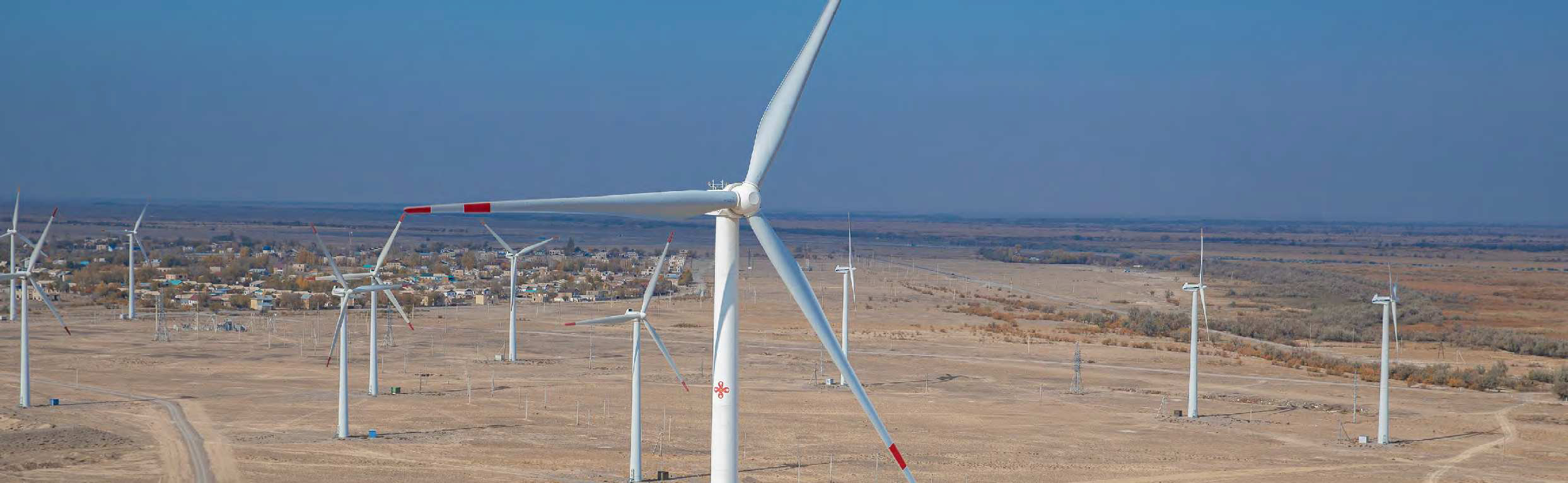
In the reporting period, the Company fully implemented the project “Construction of a 60 MW WPP in the Shelek Corridor with the prospect of extension up to 300 MW”. On 21 July 2022, the Company received a commissioning certificate, and the facility was officially unveiled on 12 September 2022.
The project was implemented by Samruk-Energy JSC in partnership with China-based Power China and is a successful example of international cooperation in the energy sector.
The new plant consists of 24 wind turbines from GoldWind (one of the world's leading manufacturers of wind turbines), each with a nominal capacity of 2.5 MW allowing to produce more than 225.7 million kWh of additional electricity per year. In addition, the launch of the power plant will reduce greenhouse gas emissions by up to 206,000 tonnes and replace about 89,000 tonnes of fuel equivalent per year.
Investment projects of Samruk-Energy JSC
During the reporting period, the Company continued to implement 12 investment projects aimed at improving the reliability of energy supply in the industrial and domestic sectors of the country, ensuring a low-carbon development strategy, supporting, developing and integrating RES, increasing the export potential, energy security and energy independence of Kazakhstan.
1. REBUILDING UNIT 1 WITH INSTALLATION OF NEW ELECTROSTATIC PRECIPITATORS.
Description and purpose of the project: Construction of a power unit with installed capacity of 500 MW and new electrostatic precipitators, which will increase the installed capacity of TPP-1 to 4,000 MW.
Results for 2022: Removal of main and auxiliary equipment of the power unit and ash collector. Supply of boiler, turbine and their accessories, generator, transformers, electrical equipment. The boiler and electrostatic precipitators were installed. Construction and installation work is underway: installation of the turbine, auxiliary equipment and electrical equipment.
Actual completion rate was 75.17%, removal – 84.38%, installation – 65.96% and supply of equipment and materials – 53.35%.
Financing: The project is implemented with own and borrowed funds (Halyk Bank).
Implementation period: December 2023.
2. EXTENDING AND UPGRADING EKIBASTUZ GRES-2 WITH INSTALLATION OF UNIT 3.
Description and purpose of the project: Extension and reconstruction of Ekibastuz TPP-2, as well as the construction of power unit No 3, will improve the reliability of energy supply to all sectors of the economy and the population, and increase the country's export potential.
Results for 2022: In January 2022, an application was submitted to the Market Council for an individual capacity tariff.
Under the 2021 Mediation Agreement with equipment supplier Quartz KZ LLP (China), 2,184.5 out of 7,781.6 tonnes of equipment (28%) was delivered to the plant in 2022. Delivery of the equipment from the city of Jinan is complete. The equipment has been taken on the balance sheet of Ekibastuz TPP-2. Negotiations are currently underway with HAERBIN ERANTEX TECHNOLOGY for the shipment and repackaging of the equipment in Harbin city.
On 11 November 2022, a contract was signed with a consortium comprising KIT-Holding LLP, together with Design Research Republican Unitary Enterprise BelNIPIErgoprom for amendments of design estimate documentation at P stage, SpetsStroiTekhMontazh-PV LLP for construction of hangars No. 1, 2 and 5. Construction and installation works in progress.
On 26 September 2022, a memorandum was concluded between Samruk-Kazyna JSC and CMEC Group (PRC) for the construction of power unit No. 3.
Financing: Sources of financing are being identified.
Implementation period: 2006-2026.
3. TRANSITION TO IN-PIT CRUSHING AND CONVEYING (IPCC) FOR COAL EXTRACTION, TRANSPORTATION, AVERAGING AND LOADING AT BOGATYR MINES, EKIBASTUZ COAL FIELD
Description and purpose of the project: Replacement of the main worn-up means of coal shipment, crushing and transportation, as well as the phased transition of Bogatyr Open Pit Mine to a flow technology of coal convening to near-surface bedding stockyards, with its subsequent loading at surface haulage systems, which will increase the production capacity of the enterprise.
Results for 2022: ThyssenKrupp equipment has been delivered in full. All foundation work has been completed. The erection of steel structures and the pre-assembly of all equipment have been completed. Currently, construction, installation and commissioning works of the main electrical equipment (stacker, crushing and loading units, belt hoisting conveyor, drum reclaimer) are being carried out.
The management of Bogatyr Komir LLP decided to mine coal in the winter period of 2022- 2023 using the “old technology” with parallel commissioning of the in-pit crushing and conveying system. Therefore, the construction and installation work for the Yuzhny storage and the auto-road leading to the IPCC facilities was postponed to spring 2023. Technical commissioning of the technology was carried out in December 2022 and the commissioning of the IPCC facilities is about to be completed.
Financing: Borrowed funds from EDB.
Implementation period: 2013-2023.
4. CONSTRUCTION OF A 50 MW WIND POWER PLANT NEAR EREYMENTAU
Description and purpose of the project: Construction of a 50 MW wind power plant near Ereymentau city will generate about 215 million kWh of electricity per year. In addition, the use of renewable energy sources will help to reduce the use of hydrocarbon energy products in electricity generation.
Results for 2022: Work was completed on the construction of access and intra-side roads, on the installation sites for wind turbines (foundations for wind turbines), on the reconstruction of existing ETLs and the laying of 35 kV CLs, and on the construction of the 220/35 kV substation (SCB, CCB and checkpoint buildings).
Financing: 30% — the Company's own funds, 70% — borrowings.
Implementation period: 2014-2024.
5. UPGRADE OF ALMATY CHPP-2 WITH LOW ENVIRONMENTAL IMPACT
Description and purpose of the project: Construction of a new plant using gas turbine technology with electric capacity of up to 600 MW and thermal capacity of 800 Gcal/h at the site of Almaty TPP-2 will reduce the negative environmental impact of the plant on the ecological situation of Almaty city. The project is being implemented as part of an order from the President of the Republic of Kazakhstan.
Results for 2022: On 30 of December 20021, RSE Gosexpertiza gave a clean opinion on the feasibility study of the project involving the construction of a new gas turbine TPP at the site of Almaty TPP-2 using the existing infrastructure on the basis of Siemens equipment (GTU- SGT5-2000E). According to European Bank for Reconstruction and Development rules, the final decision on the choice of technology shall be made after a competitive selection process of an EPC contractor.
The feasibility study results were approved by Samruk-Kazyna Board of Directors on 27 June 2022, and by Samruk-Energy Board of Directors on 15 September 2022. On 27 October 2022, an open two-stage international tender for the selection of an EPC contractor was announced. Technical specification for the selection of an EPC contractor and the draft EPC contract are based on the yellow book of the FIDIC (International Federation of Consulting Engineers). An EPC contract is expected to be made.
Financing: Construction work on the new gas plant will be carried out with funds attracted from a syndicate of leading international and Kazakhstan banks – the European Bank for Reconstruction and Development (EBRD), the Asian Development Bank (ADB) and the Development Bank of Kazakhstan (DBK). The financing will be in KZT, with a floating interest rate linked to TONIA (Tenge OverNight Index Average).
On 25 November 2022, a Loan Agreement was concluded between the plant owner Almaty Power Plants JSC and the EBRD to finance the project. A letter of intent to provide financing for the project was also signed between Almaty Power Plants and DBK.
Implementation period: 2022-2026.
6. UPGRADE OF ALMATY CHPP-3
Description and purpose of the project: Reconstruction of Almaty TPP-3 with construction of a CCGT of up to 545 MW will not only cover in part the shortage of manoeuvring capacity in the Southern Zone of Kazakhstan, but will also provide consumers in Almaty and Almaty region with uninterrupted supply of electricity and heat in accordance with load and temperature schedules.
Results for 2022: On 10 of October 2022, RSE Gosexpertiza expert review agency gave a clean opinion on the feasibility study of the project on construction of a new power plant using two combined cycle steam and gas power units of 543.6 MW total capacity (ISO) at the site of Almaty TPP-3 using the existing infrastructure on the basis of Siemens equipment (GTU- SGT5-2000E). Between October and December 2022, results of the feasibility study were approved by the Management Board of Almaty Power Plants JSC, the Management Board of Samruk-Energy JSC, ECC Fund and the Board of Directors of Samruk-Energy JSC. The materials are currently under review by ECC of Samruk-Kazyna JSC.
As part of the Almaty Power Plants project, a tender for the procurement of an EPC contractor service is planned in accordance with the procurement procedures of Samruk-Kazyna JSC through a Prequalification Process (PQP 2.0) for potential suppliers. At present, Almaty Power Plants together with Samruk-Energy JSC and Samruk-Kazyna Contract LLP are preparing the PCR 2.0 materials for potential suppliers. The planned deadline for completion of the technical specification, the client's requirements for the contractor and the draft EPC contract is the second quarter of 2023.
On 14 December 2022, Almaty Power Plants won the auction bidding for the construction of load-following generation facilities (9,788,700 KZT/MWh*month ,excl. VAT). The declared capacity is 480 MW. On 27 January 2023, the contract was signed by Almaty Power Plants JSC for the purchase of electric capacity availability maintenance service was sent to the Financial Settlement Center (FSC).
Financing: Preparations are underway to arrange financing with the Eurasian Development Bank. A preliminary indicative analysis was carried out.
Implementation period: 2021-2025.
7. RECONSTRUCTION OF ORAZBAYEV TPP-1 OF ALMATY POWER PLANTS WITH CONSTRUCTION OF A 200-250 MW CCGT
Description and purpose of the project: Extension of Almaty TPP-1 with construction of a 200-250 MW CCGT will ensure reliability of heating and electrification of Almaty and Almaty region.
Results for 2022: On 4 January 2023, RSE Gosexpertiza gave a clean opinion on the feasibility study of the project.
Implementation period: 2021-2026.
8. CONSTRUCTION OF COMPENSATING KERBULAK HPP ON THE ILI RIVER
Description and purpose of the project: Creation of an equilizing reservoir in the tail of Kapshagai HPP is intended not only to help level out the uneven weekly and daily releases of Kapshagai HPP and put Kapshagai HPP into peak-load coverage mode using all available capacity in the deficit zones of the Almaty power system and the Southern power zone of Kazakhstan, but also to improve the environmental situation in the lower reaches of the Ili River.
Results for 2022: Work has begun on the registration of land for Kerbulak HPP. According to calculations of Kazhydro LLP as a part of the feasibility study, the total area of required land allotment in the area of planned construction of Kerbulak HPP makes 708.5 ha, including: permanent land use of 488.9 ha (20 ha for placement of HPP dam, plant and switchyard are pledged by Halyk Bank), temporary land use of 219.6 ha during construction to accommodate the pit and builders' camp.
Financing: To determine the source of funding, the Company plans to work to ensure that the project's investment is repaid.
Implementation period: 2011-2027.
9. UPGRADE OF CABLE NETWORKS IN ALMATY
Description and purpose of the project: Reconstruction of cable networks will increase the capacity of Almaty city by 30% and will also reduce the accident rate in the distribution networks of Alatau Zharyk Company JSC. The project was approved as part of the National Project “Sustainable Economic Growth Aimed at Improving the Welfare of Kazakhstanis”11.
Results for 2022: On 4 of April 2022, implementation of the project was approved by the Decision of Samruk- Energy JSC Management Board. Design and estimate documentation has been approved for 17 sites. Contracts for construction and installation were concluded. As of the reporting date, 162.5 km of cable lines and 76 transformer substations (TS) were replaced. The procurement of a feasibility study development for the project and the implementation of a ACEMS by sites is planned for 2023.
Financing: According to the project structure, financing is planned to be provided by replenishment of equity capital from Samruk-Kazyna JSC with borrowed funds attracted from the Second Tier Bank.
Implementation period: 2022-2030.
10. RECONSTRUCTION AND MODIFICATION OF CASCADE HPPS
Description of the project: Reconstruction and modification of Cascade HPPs will ensure reliability and safety of plant operation, as well as an increase in installed capacity by 7.5 MW and an increase in electricity generation by 41.7 million kWh per year to supply consumers in Almaty and Almaty region.
Results for 2022: As part of the bilateral meetings between Samruk-Energy JSC and the World Bank, an agreement was reached that the bank would finance the development of a feasibility study for the project.
Financing: World Bank’s grant for development of a feasibility study.
Implementation period: 2022-2027.
11. CONSTRUCTION OF A 310 MW HYBRID WPP/HPP PLANT IN ALMATY PROVINCE
Description of the project: Construction of the hybrid WPP/HPP plant is intended to partially cover the electricity deficit by generating more than 1,227 million kWh of electricity per year, reduce the use of hydrocarbon energy products in electricity generation, and improve the economic situation in Almaty region.
Results for 2022: On 12 September 2022, a Memorandum of Cooperation was signed between Samruk- Kazyna JSC and PowerChina Resources Limited.
Financing: To identify the source of financing, the Company is set to develop a feasibility study.
Implementation period: 2022-2028.